
Kijimuna
展品 · 非卖品Red-bodied banyan tree spirit of the Ryukyus, sharing the ocean's bounty with fishermen who honor it.
A tree spirit said to dwell in banyan trees and other large trees.…
Okinawa
Bringing Good Fortune and ProsperityYokai Tales · 展览典藏
按民间传说主题策展
艺术家作品集
47 件作品
Red-bodied banyan tree spirit of the Ryukyus, sharing the ocean's bounty with fishermen who honor it.
A tree spirit said to dwell in banyan trees and other large trees.…
Okinawa
Bringing Good Fortune and Prosperity
Agile Echigo mountain dweller who shoulders the traveler's burden in exchange for a warm meal and fire.
A yokai from the folklore of Uonuma in Echigo Province. Tall and agile, it resembles a monkey but is not one, with red hair and gray body fur. On mountain paths, it will carry travelers' luggage in exchange for a boxed meal. It is also known to help people in nearby villages and sometimes comes to warm itself by a bonfire.
Niigata
Business Growth and Prosperity
The legendary Morinji kettle that grew limbs, fan, and umbrella to delight audiences on the tightrope.
The legend of this yokai originated from an iron tea kettle, believed to be about 500 years old, that is still preserved at Morinji Temple in Tatebayashi, Gunma Prefecture.…
Gunma
Success in Business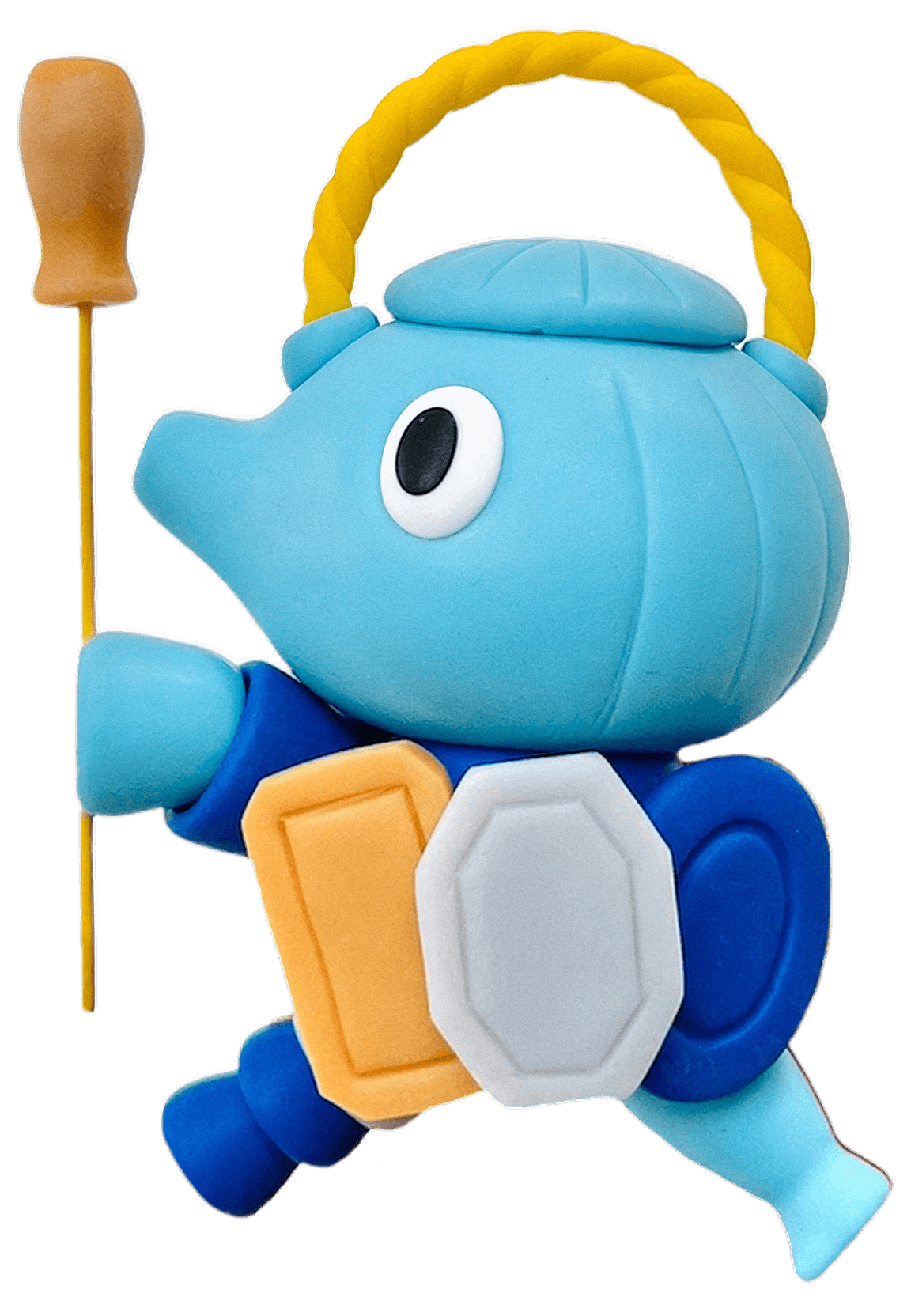
General of discarded tableware, marching in the folk tradition of Izumo to ward off disease and pestilence.
The Setotaisho ("General of Seto Ware") is a yokai in the form of ceramic tableware, depicted by the great Edo-period yokai artist Toriyama Sekien.…
Shimane
Protection from Disease
Late autumn persimmons of Sendai, rolling into town as robed figures who scatter fruit and sweet scent.
A persimmon yokai said to originate from the Jūnininmachi district on the east side of Sendai Station. According to the legend, if persimmons are left unharvested until late autumn, they transform into monks or nyūdō (bald-headed monks) and wander through the town, throwing persimmons in every direction. They are also said to leave behind droppings with a surprisingly sweet fragrance.
Miyagi
A Bountiful Harvest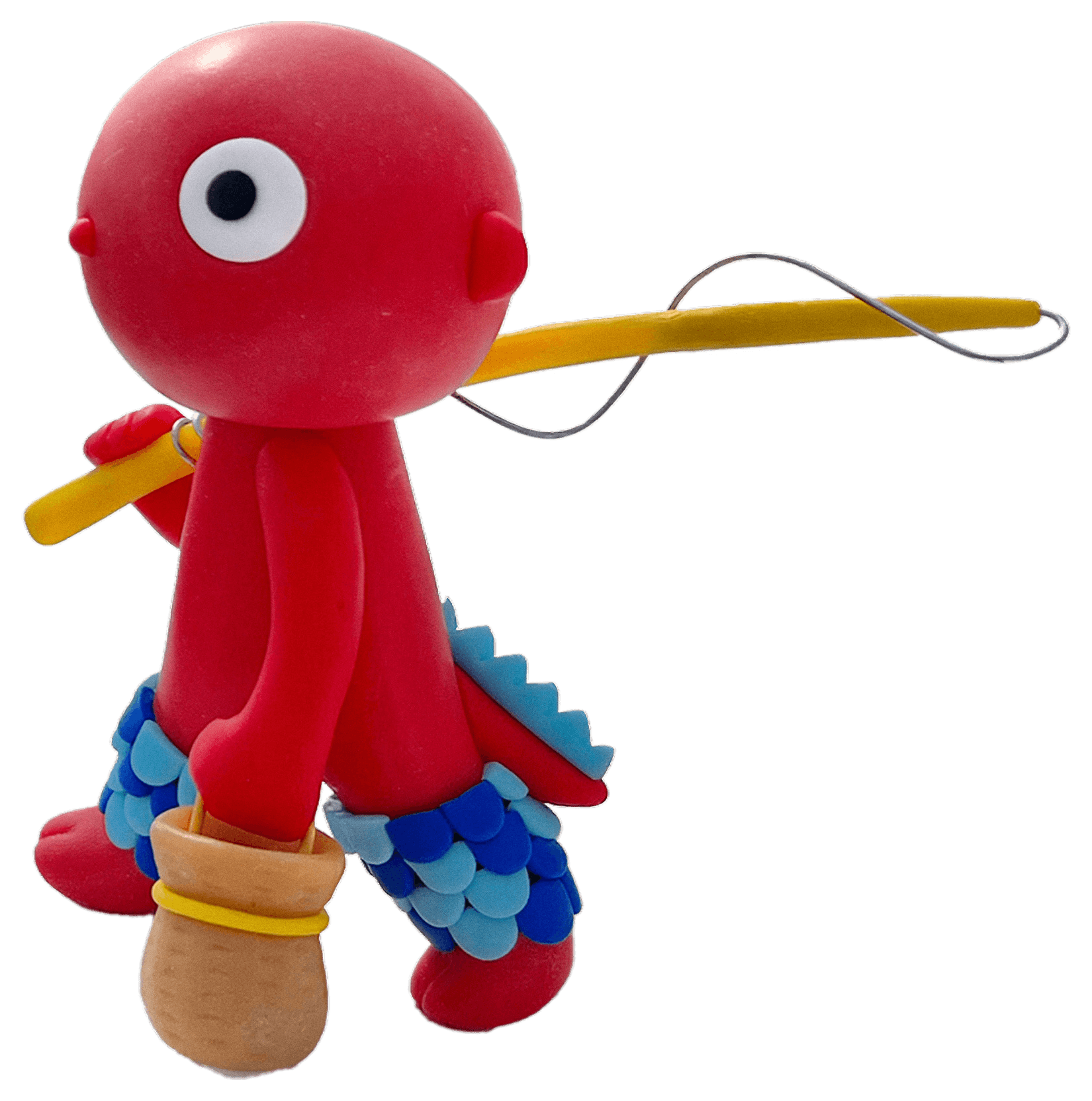
Slow-swimming bronze spirit of the Uwa Sea, whose rare sighting in regional lore is hailed as an omen of long life.
Legends of the Umibōzu ("Sea Monk") can be found throughout Japan, but they are especially common along the coast of the Uwa Sea in Ehime Prefecture. This particular version is said to have a reddish-bronze body, round eyes, a short tail, and, surprisingly, it is a rather slow swimmer. Anyone fortunate enough to catch sight of it is said to be blessed with a long life.
Ehime
Longevity and Good Health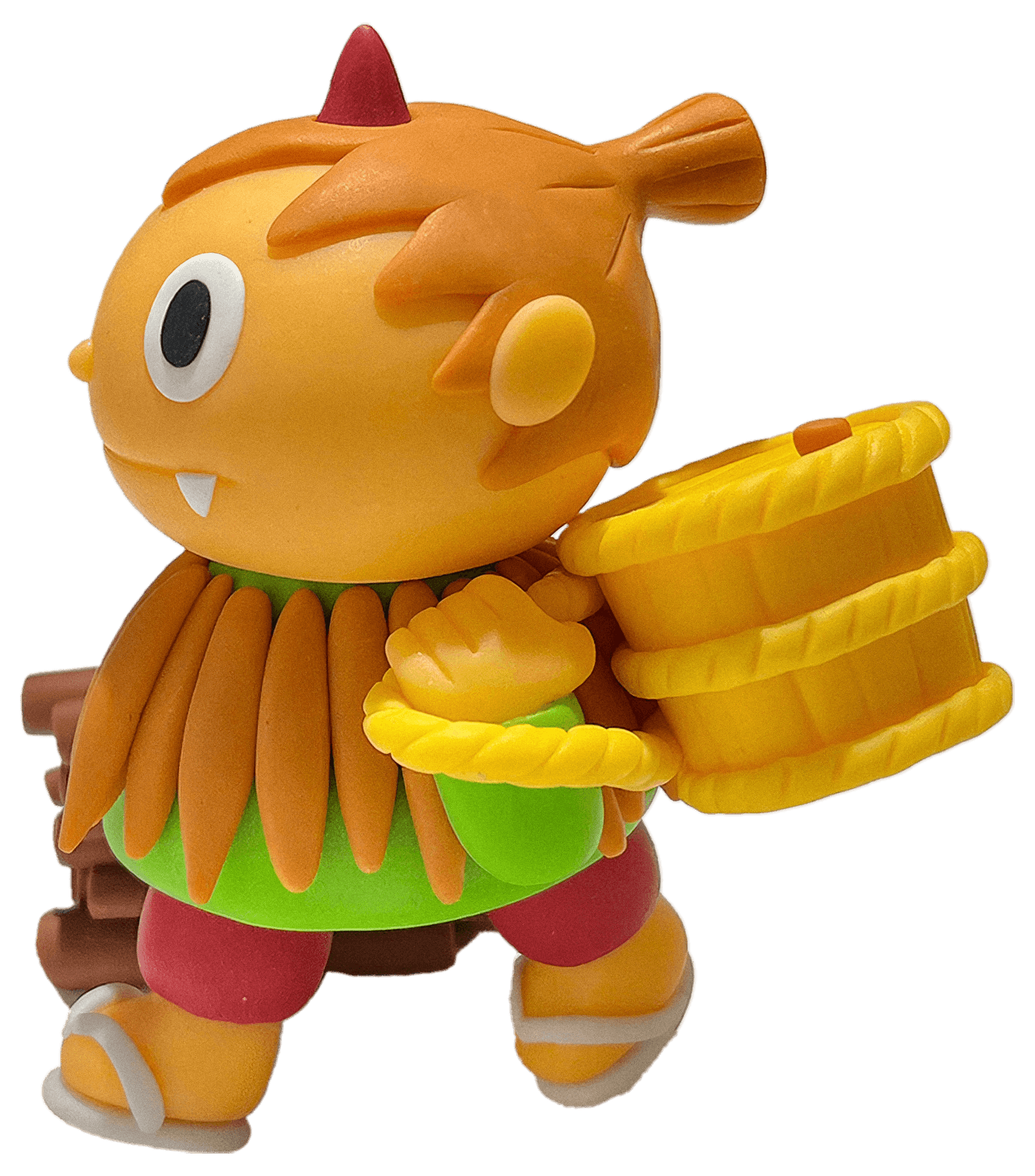
Straw-caped giant of the north who repays tavern hospitality with cords of firewood and heavy field labor.
A powerful giant oni dressed in a straw rain cape and hat. He loves sake, tobacco, and sumo wrestling. Stories about him include one in which he drinks for free at a tavern but returns the next day carrying a large load of firewood, and another in which he appears at a farm and helps with the fieldwork, only to take away a great quantity of rice afterward.
Akita
Success in Business
Gentle, straw-hatted night child of Edo carrying a tray of fresh bean curd down quiet alleyways.
A yokai that appeared in kibyōshi—illustrated comic storybooks popular during the Edo period. It does nothing more than appear on dark roads at night carrying a block of tofu. Taking the form of a child wearing a traditional straw hat, it is kind-hearted and timid. In some stories, it is even bullied by other yokai. It is said to appear all across Japan.
Tokyo
Peace and Safety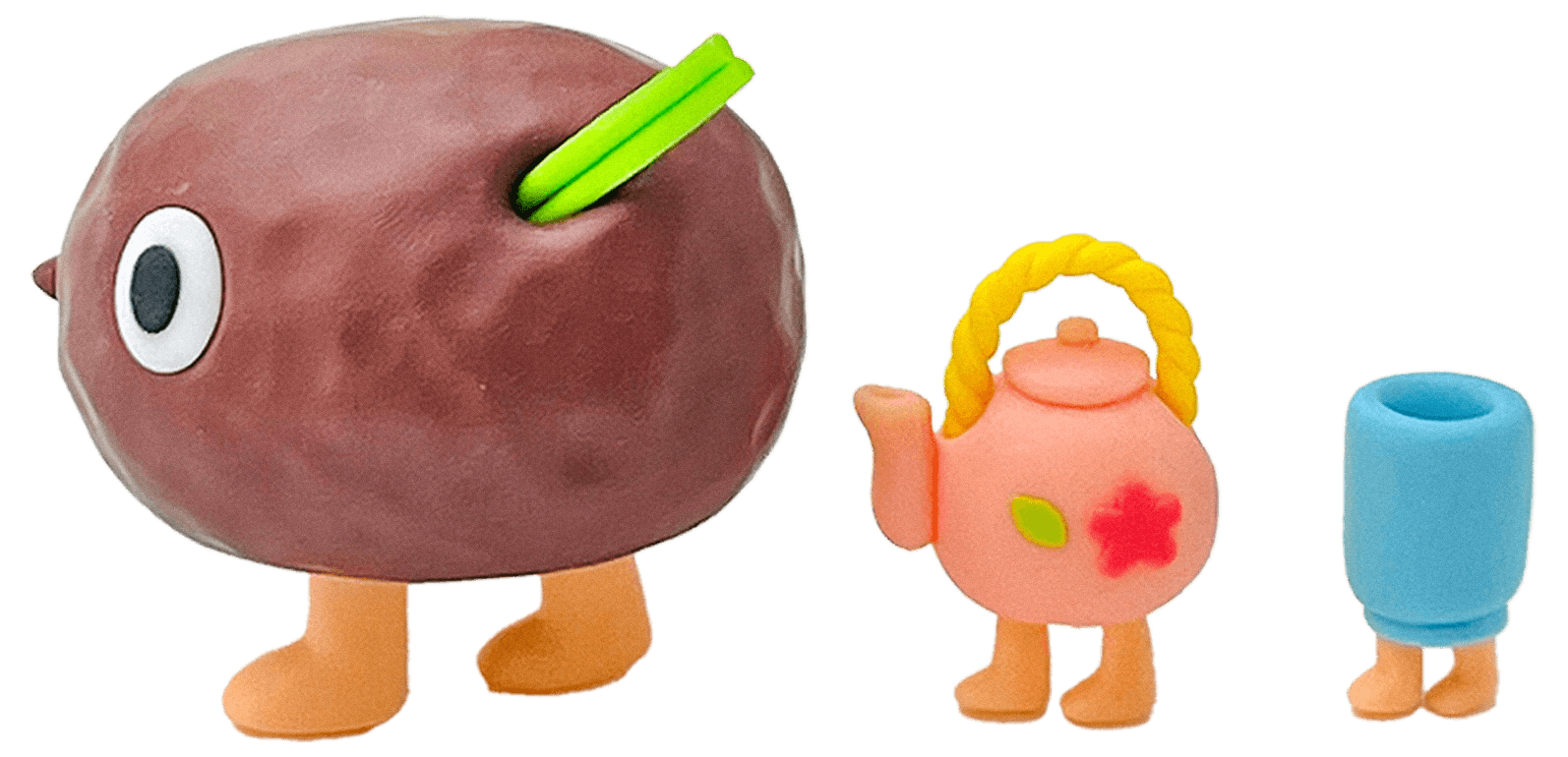
Mysterious floorboard voice of Shinjō Village that claimed only to be a sweet rice cake, filling the house with rumor.
A curious yokai said to have appeared at a farmhouse in Shinjō Village, Fukui Prefecture, now part of Sabae City.…
Fukui
A Constant Flow of Visitors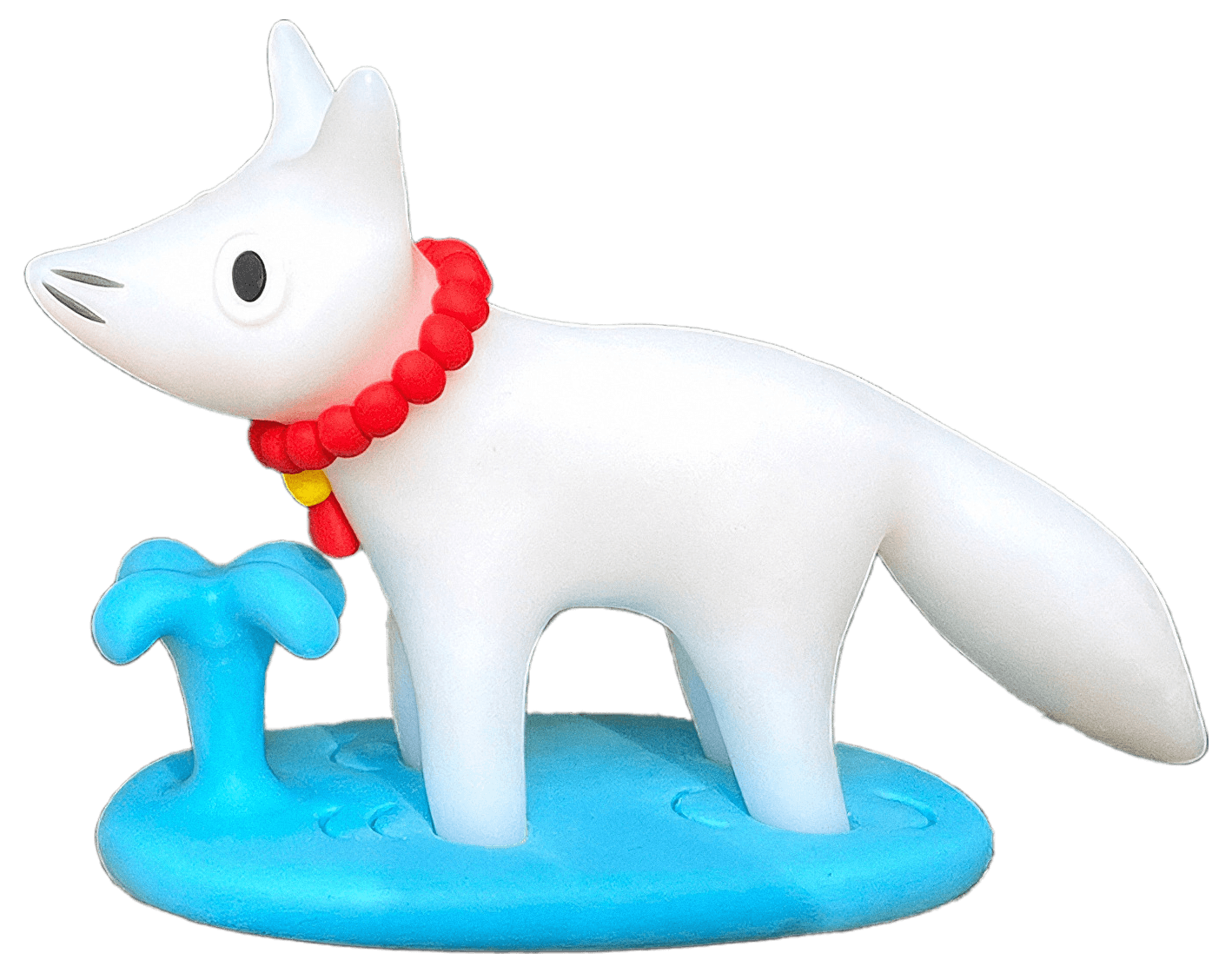
Sacred white fox of Mount Gongen whose legend tells of healing waters and the discovery of thermal springs.
According to legend, an injured white fox healed its wounds in a pond beside a small temple at the foot of Mount Gongen.…
Yamaguchi
Healing and a Steady Flow of Visitors
Ocean child rescued in Enshū fields, who foretells seasonal shifts through the rising rhythm of surf.
A small yokai said to have appeared in the rice fields of Enshū. After becoming lost, it was rescued by a kind villager and was able to return to its home in the sea. In gratitude, it began foretelling the next day's weather through the sound of the sea, helping the village enjoy abundant harvests year after year.
Shizuoka
A Bountiful Harvest
Sacred messenger sharks of the Dragon Palace on their annual lunar pilgrimage to Izawa-no-Miya Shrine.
According to legend, seven sacred sharks, regarded as guardians of the sea and messengers from the Dragon Palace (Ryūgū), swim upstream from the sea to visit Izawa-no-Miya Shrine every sixth month of the traditional lunar calendar.…
Mie
Safety at Sea
Ancient primeval colossus whose massive strides shaped mountains and filled tectonic lake basins.
A gigantic yokai whose legends are found throughout Japan. It is said to be so enormous that it can move mountains, and the footprints it leaves behind become lakes. As a result, its appearance and interpretation vary greatly from region to region. Its origins are believed to trace back to writings from the Nara period about 1,300 years ago, although its true beginnings remain uncertain.
Nagano
The Fulfillment of Great Aspirations
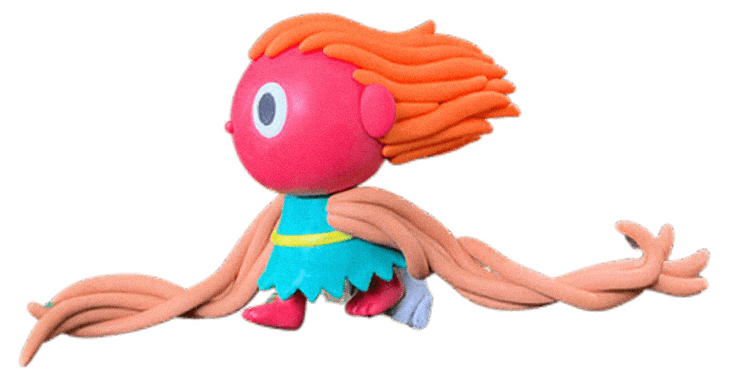
Blazing red-haired house spirit of Tosa, cousin to the zashiki-warashi, dwelling where hearths thrive.
Its trademarks are its tousled red hair and bright red nose. The color is said to be so vivid that it is difficult to look at directly. This childlike yokai is believed to bring prosperity to any household it chooses to inhabit. It is considered a relative of the zashiki-warashi, a type of household spirit found in legends throughout Japan.
Kouchi
Safety and Well-Being at Home
One-inch warrior of Naniwa who navigated the river in a rice bowl and earned court renown with a sewing needle.
One of Japan's best-known folktales, Issunboushi ("The One-Inch Boy") tells the story of a boy born in Osaka who was only one sun (about 3 cm) tall. Traveling to the capital in a rice bowl that floated down the river, he eventually defeated an oni and was rewarded with an important position at court. Similar legends are found throughout Japan.
Osaka
Success and Advancement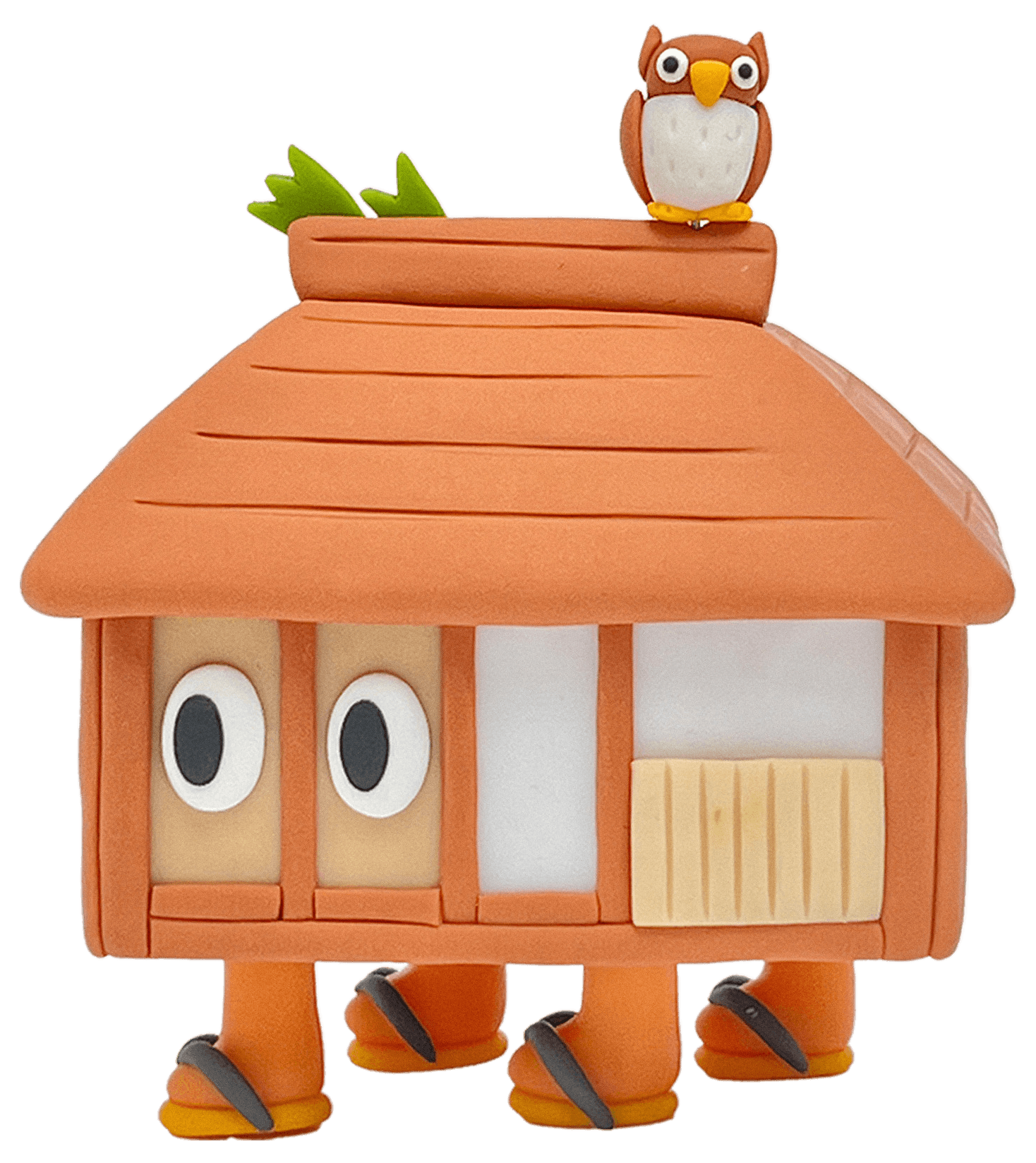
Wandering sanctuary in the Tōno hills, bestowing its treasures only upon those without greed.
An uninhabited house said to appear suddenly in the mountains of the Tōno region. Anyone who enters and takes home just one household item will afterward be blessed with financial good fortune. However, no matter how hard they try, they will never be able to find the house again. It is said to bestow wealth generously, but only upon those who are free from greed.
Iwate
Prosperity and Good Fortune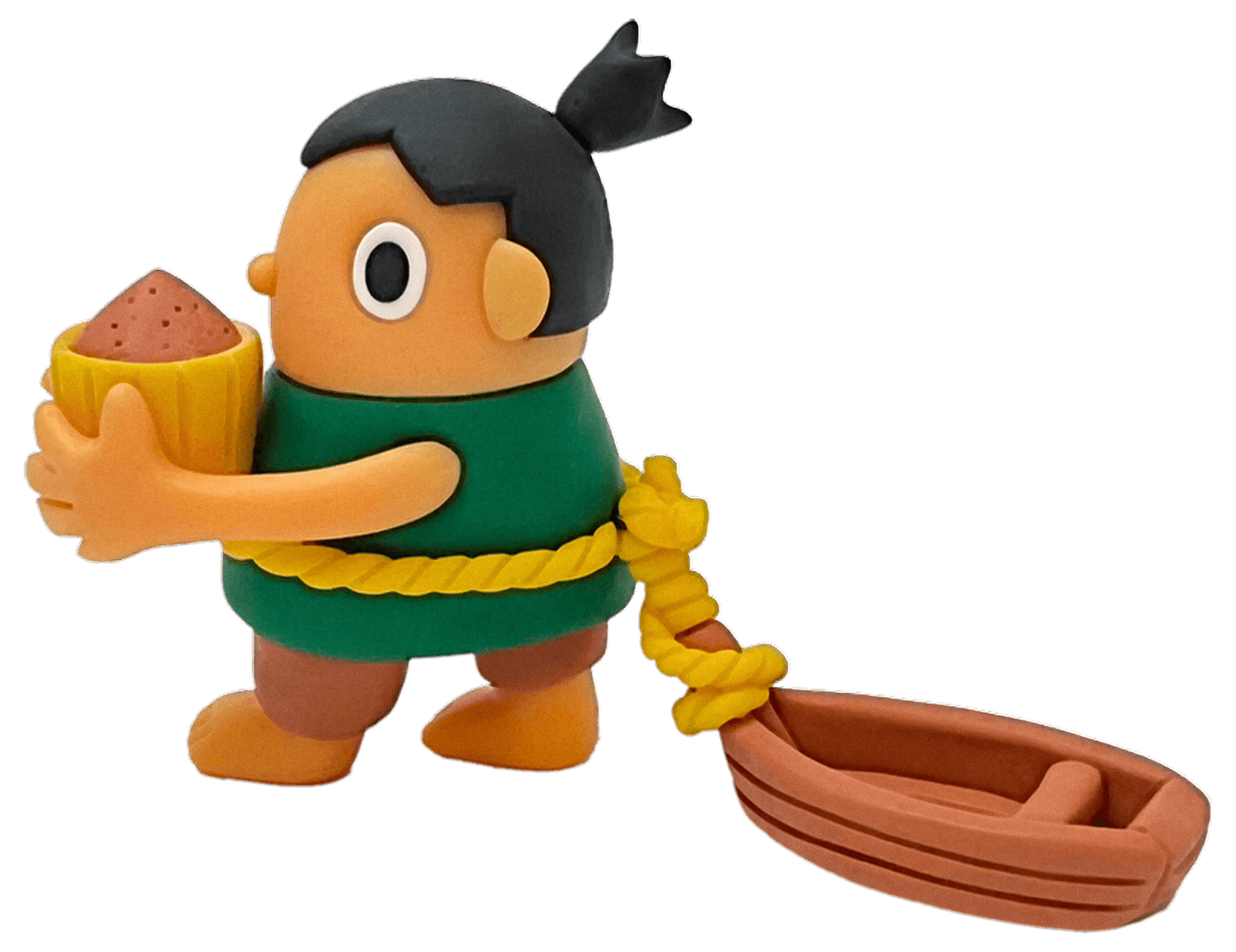
Mount Unzen giant who cleared wild slopes and opened fertile ground in return for heaping bowls of miso.
A giant said to live on Mount Unzen on the Shimabara Peninsula. Good-natured and immensely strong, he will take on major tasks such as clearing and cultivating mountain land in exchange for a heaping portion of miso. Every year, the Misogoro Festival is held in the Sukawa shopping district of Nishi-Arie, drawing large crowds.
Nagasaki
Business Growth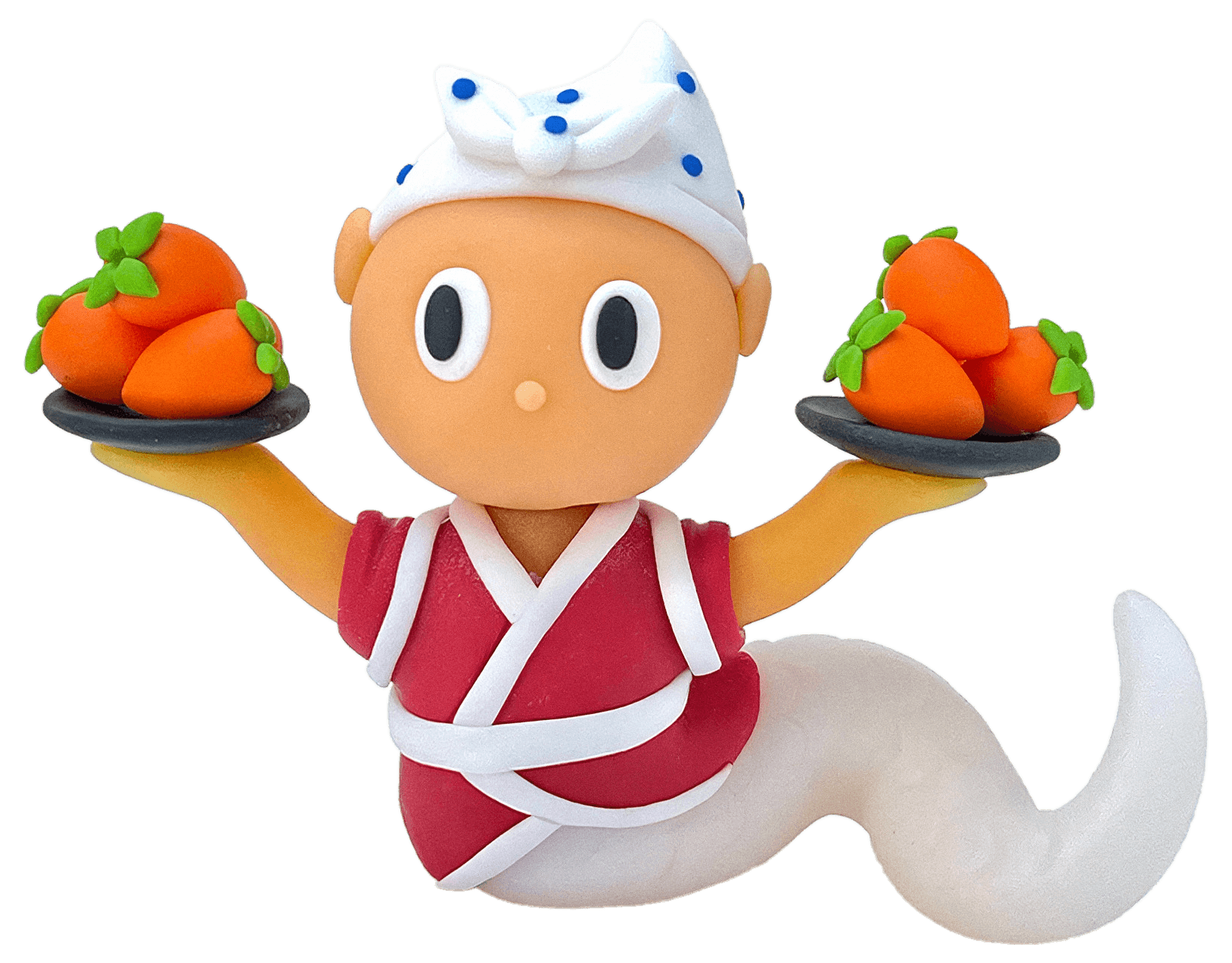
Faithful servant of Tanegaike who assumed serpent form to harvest island fruit for her companions.
A legend of a white serpent associated with Tanegaike Pond near the Tottori Sand Dunes. Otane, a servant in the household of a wealthy family, was known for always treating her companions to delicious sweet persimmons. One day, they secretly followed her and discovered that she transformed into a white serpent, crossed to the small island in the middle of the pond, and returned with the fruit.
Tottori
Success in Business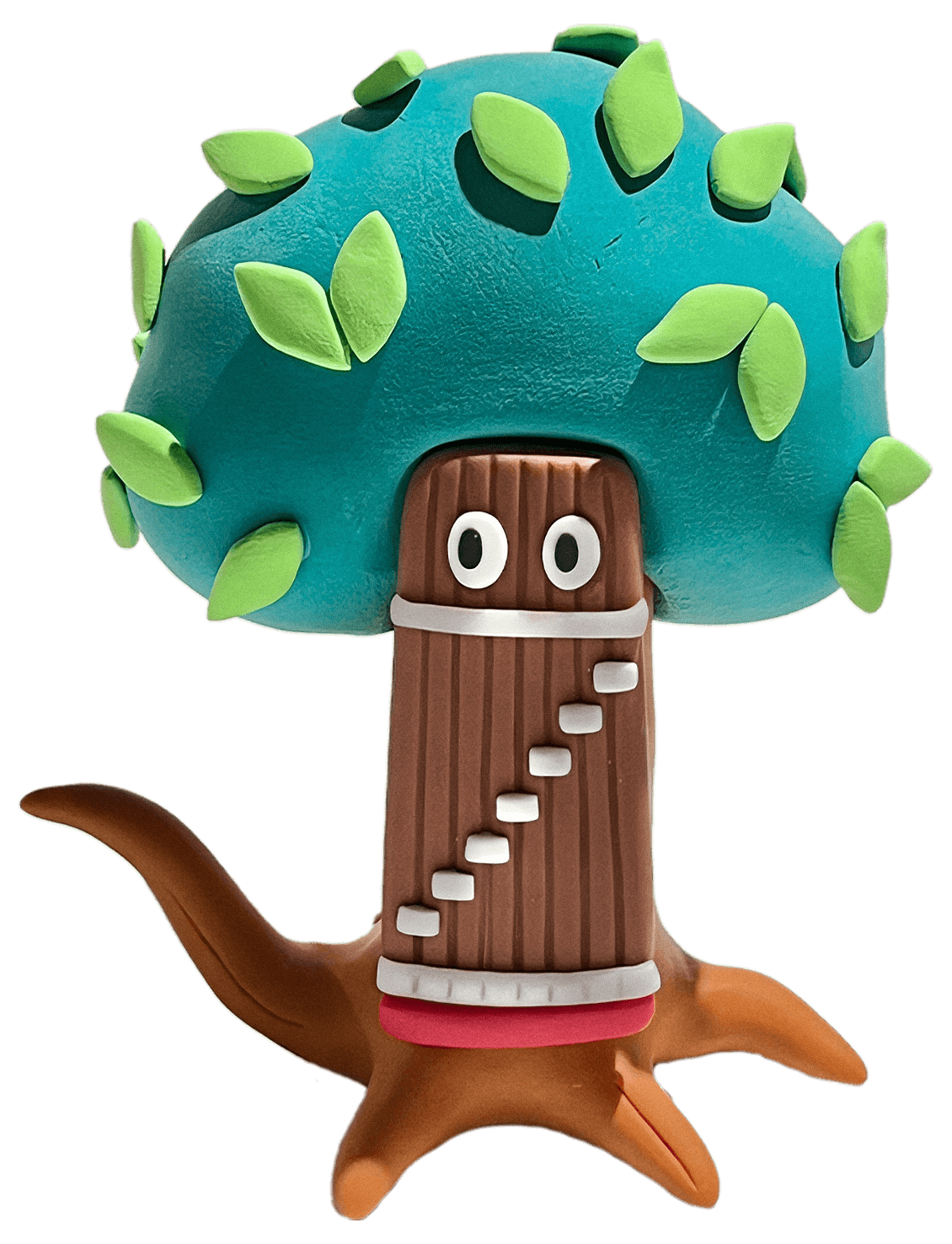
Aged zither imbued with spirit over centuries, sounding forgotten melodies when left in quiet rooms.
The Edo-period artist Toriyama Sekien depicted many yokai in the form of musical instruments and everyday objects. Among them was the Kotofurunushi, an enchanted koto (Japanese zither), which he illustrated and described in his famous collection of yokai. Meanwhile, the Hizen no Kuni Fudoki records a mysterious tale about a koto in what is now Saga Prefecture.
Saga
Peace and Safety
An alternate manifestation of the enchanted instrument, echoing ancient folklore recorded in the Hizen Fudoki.
The Edo-period artist Toriyama Sekien depicted many yokai in the form of musical instruments and everyday objects. Among them was the Kotofurunushi, an enchanted koto (Japanese zither), which he illustrated and described in his famous collection of yokai. Meanwhile, the Hizen no Kuni Fudoki records a mysterious tale about a koto in what is now Saga Prefecture.
Saga
Peace and Safety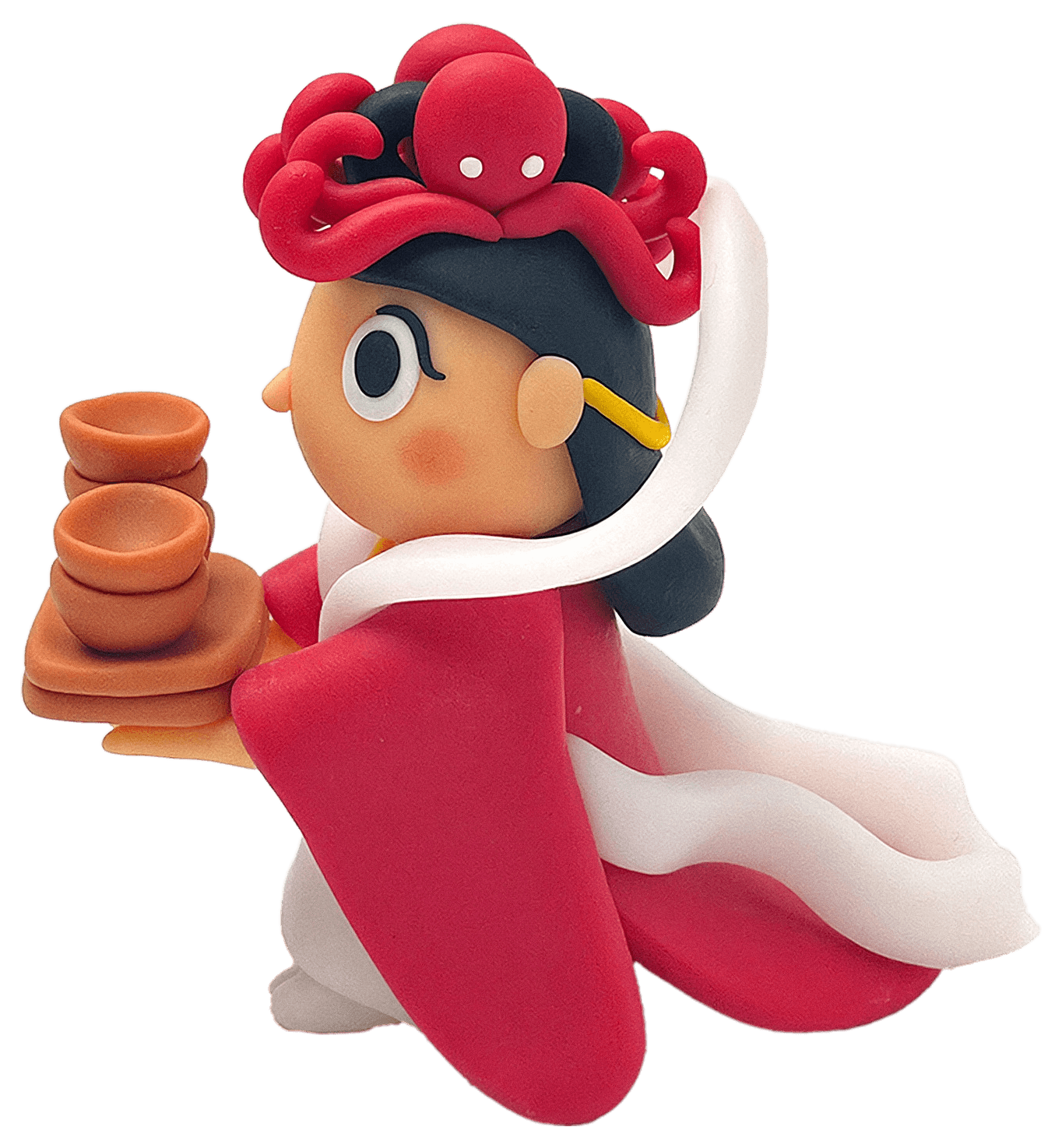
Princess of the Dragon Palace, remembered along inland waterways for granting sacred relics to worthy guests.
Legends of Otohime, the princess of the Dragon Palace (Ryūgū), are found throughout Japan, including Saitama Prefecture. In Yorii, one tale tells of a man who traveled by river to the Dragon Palace beneath the sea and received a sacred sword from Otohime. In Tokigawa, another legend tells of Otohime lending magical bowls to the villagers. These stories have been passed down for generations.
Saitama
A Constant Flow of Visitors
Elder river leader of Munakata who brokered four centuries of peace between villagers and water kin.
Chōtarō was the leader of the kappa said to inhabit the Tsurikawa River in Munakata, Fukuoka Prefecture. Believed to have lived for more than 400 years, he was said to have magnificent silver-gray hair and a long beard. (In this clayart, however, he is depicted as he appeared in his younger days.) He served as a mediator between humans and the kappa, helping to maintain harmony between the two.
Fukuoka
Business Growth
Human-faced ox calf of Mount Kurahashi whose singular prophecy in legend was kept as a shield against misfortune.
A mysterious creature said to have appeared on Mount Kurahashi in what is now Miyazu City, Kyoto Prefecture. It had the face of a human and the body of an ox. According to legend, making an image of the creature and displaying it in one's home would ward off disease and bring abundant harvests.
Kyoto
Protection from Disease and Abundant Harvests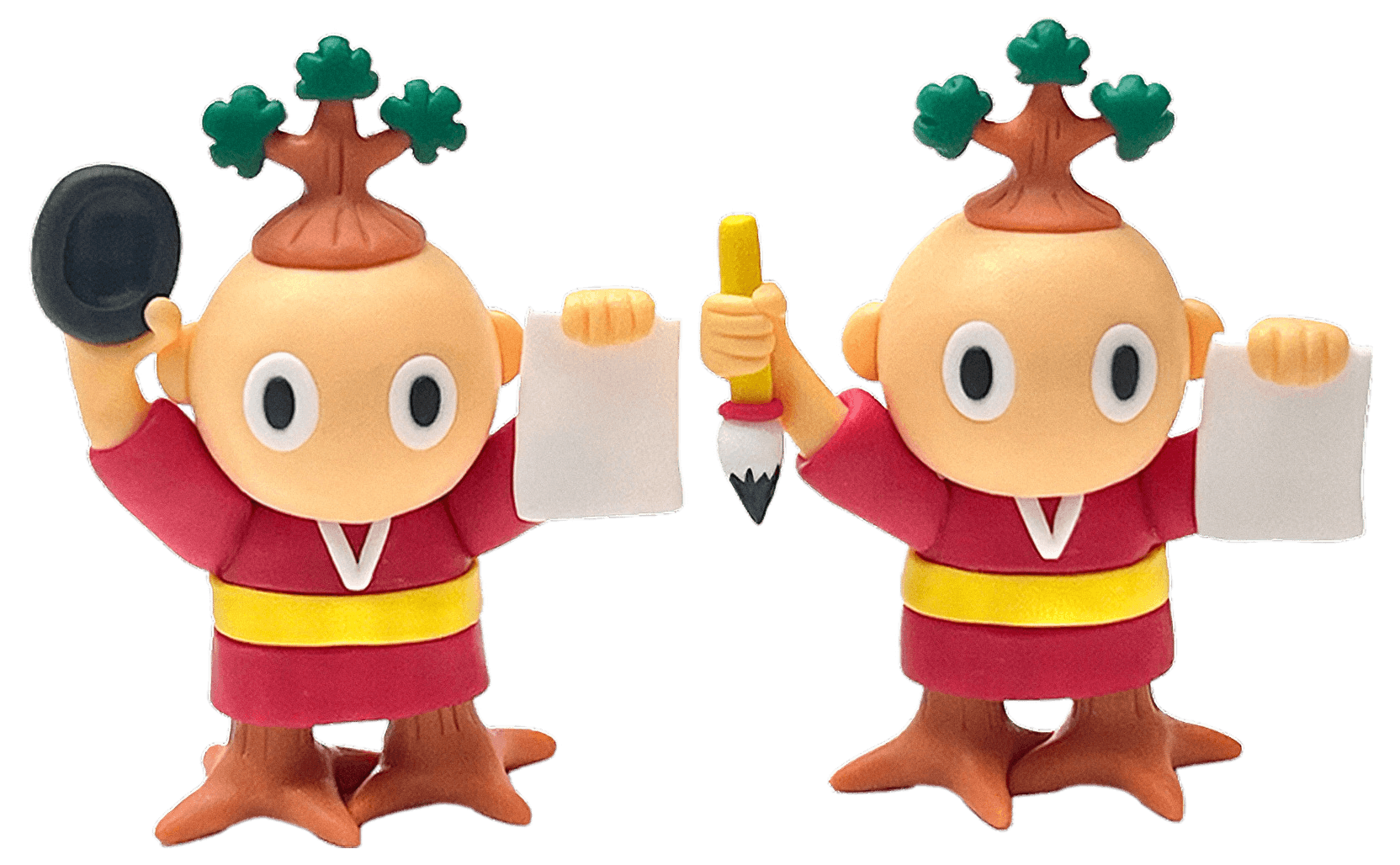
Twin dragon pine spirits who appeared as children at Chōkōji Temple, leaving brush poetry of enduring fortune.
In front of Chōkōji Temple, in what is now Toyota City, Aichi Prefecture, once stood two pine trees whose intertwined forms resembled dragons.…
Aichi
Protection from Misfortune and the Blessing of Good Fortune
Looming arbiter of the Aizu ridges, shaking mountain peaks in tests of strength and territorial balance.
Tengu, the mountain spirits of Japanese folklore, are found in legends throughout the country. The tengu of Aizu are said to have feet so enormous that they could stomp through the roof of a house. The thunderous sound of giant trees crashing deep in the mountains or huge boulders tumbling down the slopes may, according to legend, be the result of territorial battles between rival tengu.
Fukushima
Rewarding Virtue and Punishing Evil
Odoriba cats dancing beneath the moonlight with stolen tenugui towels, keeping midnight paths lively.
A folktale from the area around Odoriba Station in Kanagawa Prefecture. A household kept finding that its hand towels were being stolen night after night, only to discover that the culprit was the family cat. When they followed it, they found a group of cats wearing the towels over their heads, singing and dancing merrily in a circle.
Kanagawa
Road Safety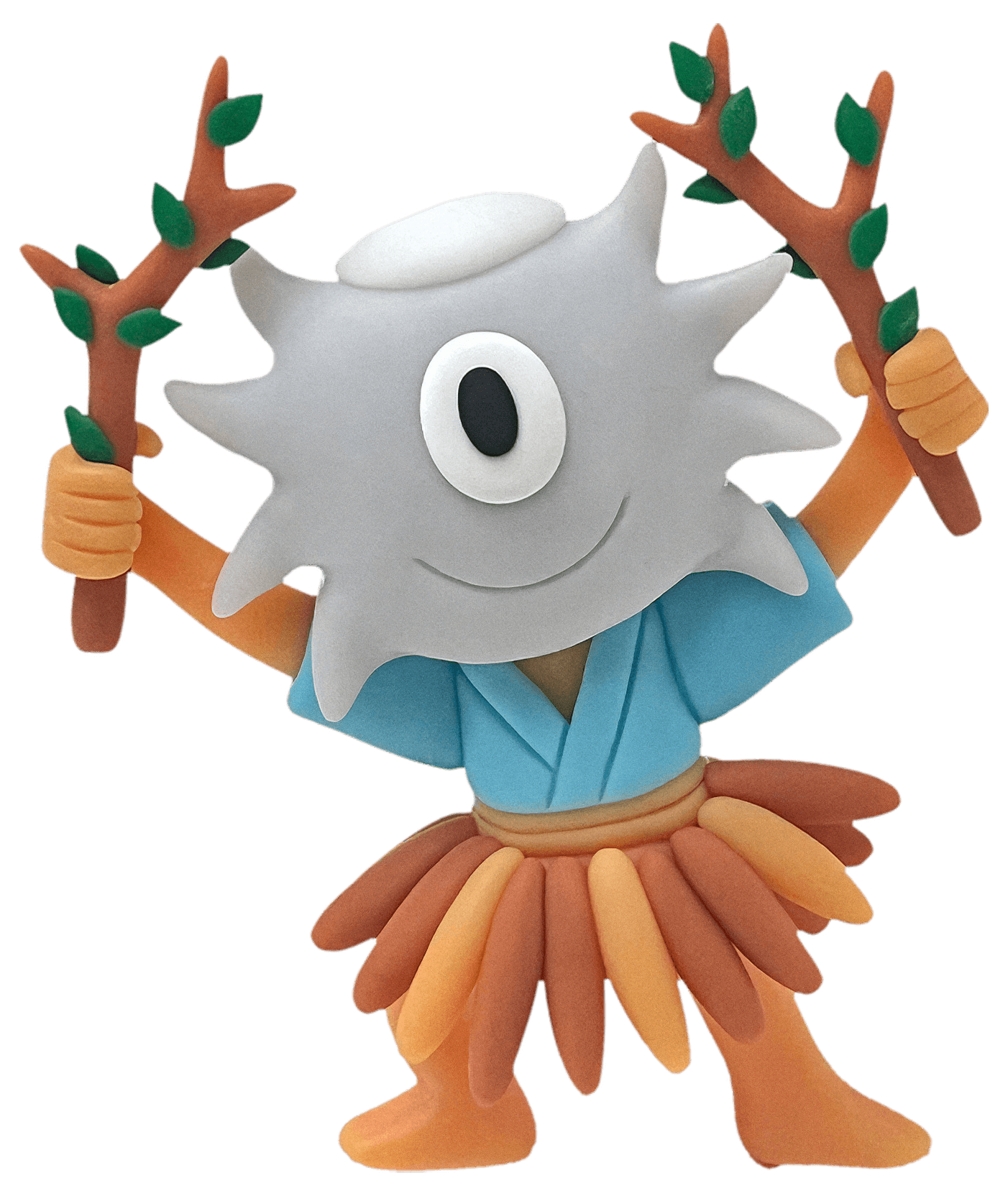
Playful mountain child of southern Higo who helps haul timber by day and slips into village baths at dusk.
A mountain spirit said to inhabit southern Kumamoto Prefecture. It is sometimes described as a kappa that has come ashore and has a dish-shaped plate on its head. About the size of a child, it is friendly toward humans and may even help with work in the mountains. However, it is also fond of mischief and has been known to enter people's homes and use their baths without permission.
Kumamoto
Business Growth
Unseen footsteps echoing on dark Yamato roads, stepping aside when greeted with courtesy.
A yokai from the folklore of what is now Uda District in Nara Prefecture. It is said to follow travelers along dark roads at night, its footsteps echoing close behind. However, if the traveler politely tells it to go on ahead, the footsteps suddenly disappear. No one, it is said, has ever caught a glimpse of the mysterious being itself.
Nara
A Safe Journey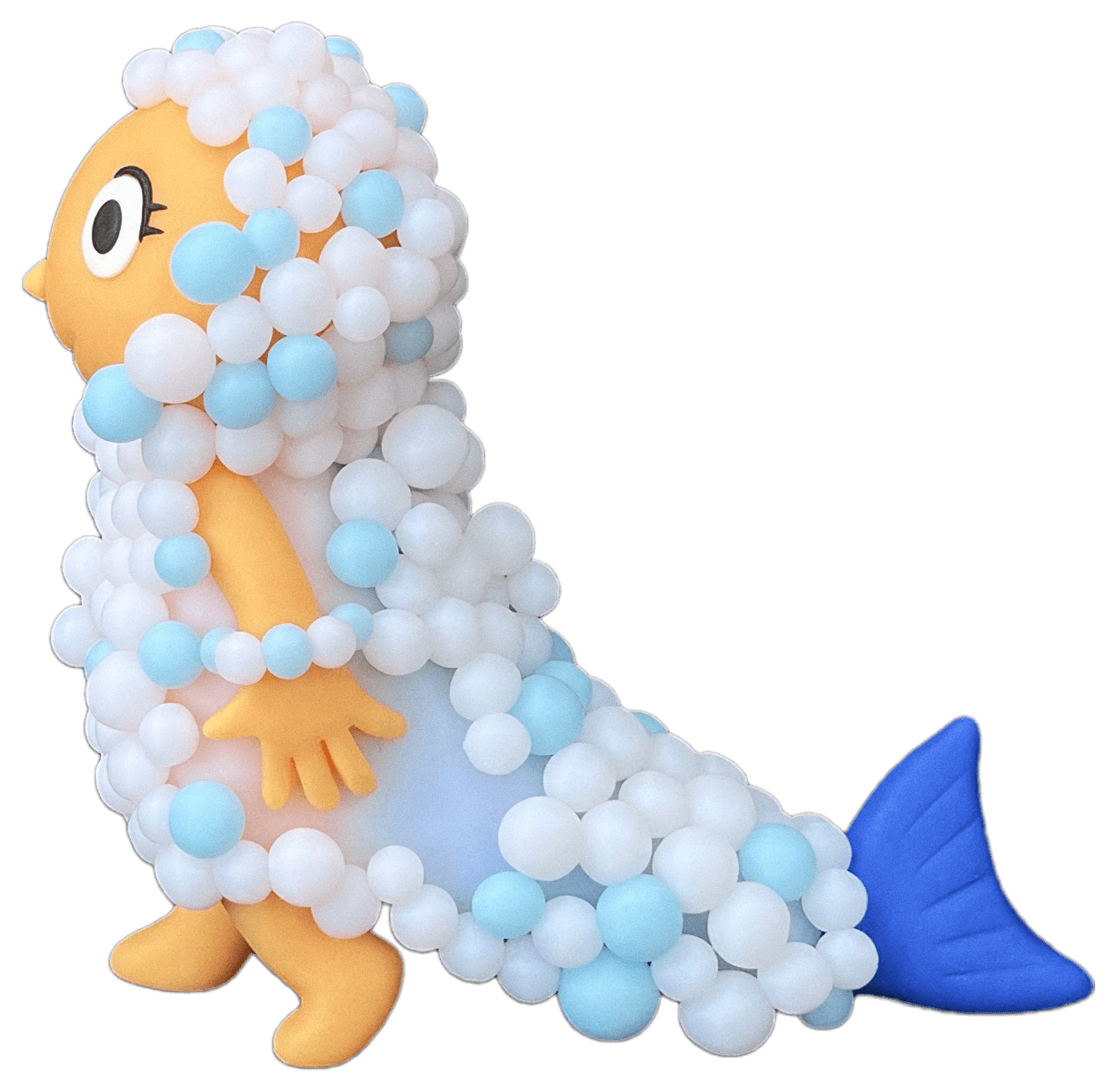
Northern sea spirit of Ainu tradition, born of ocean foam with an enchanting voice that guides coastal waters.
In the traditions of the Ainu, the Indigenous people of Japan, these are spirits that dwell in the sea. They are said to possess graceful beauty and enchanting voices. Some bring misfortune by possessing humans, while others serve as protective guardian spirits. Their true form is also said to be nothing more than the foam upon the sea.
Hokkaido
Safety at Sea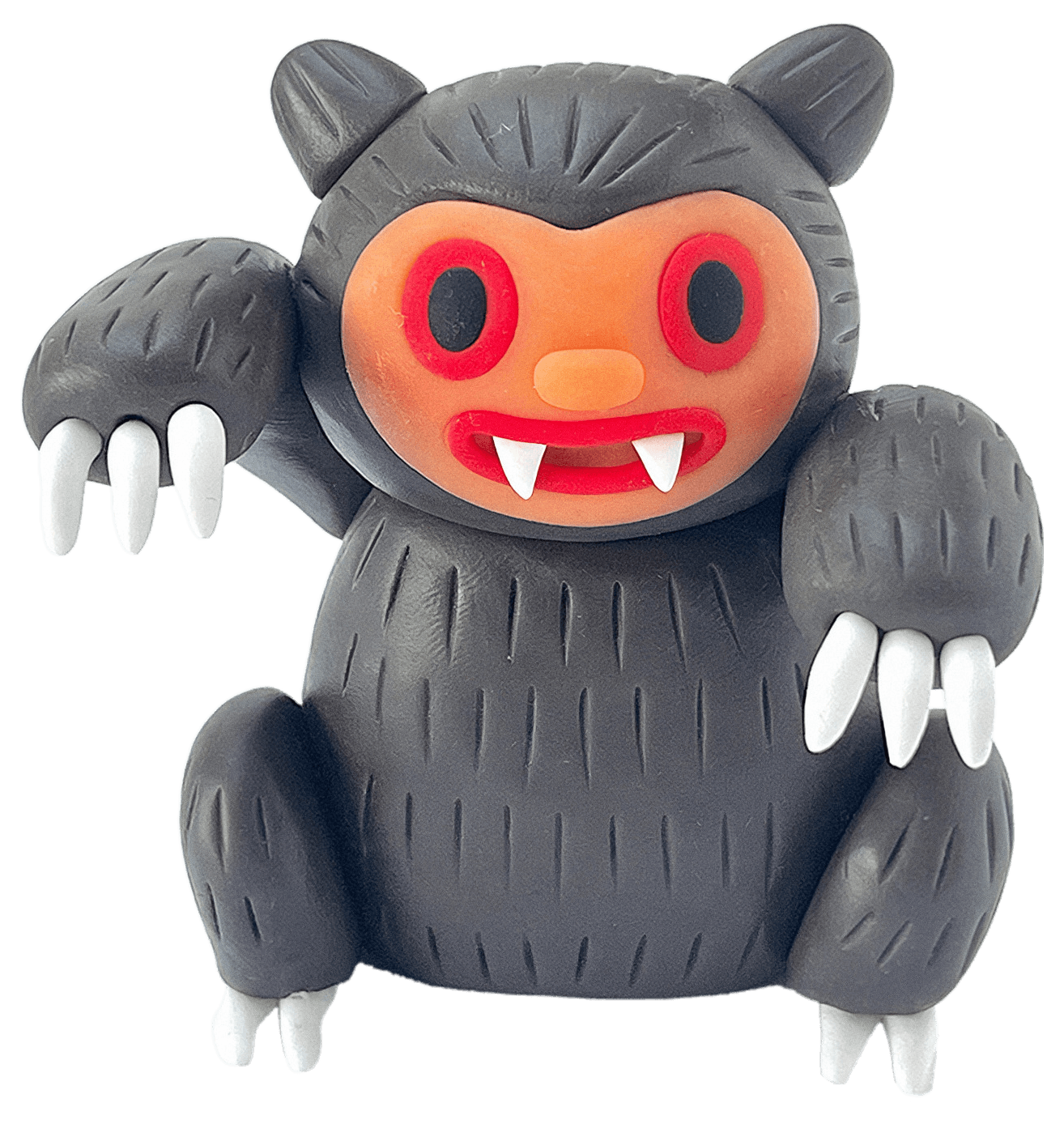
Crimson-faced mountain giant of Satsuma, matching strength with outlaws in bouts of forest sumo.
A powerful yokai said to dwell in the mountains of Satsuma. Its face is bright red, as though painted with makeup, and its body is as large as a bear. Proud of its strength, it challenges every person it encounters to a sumo match. It is said to be so formidable that even the toughest outlaws regard it as the ultimate opponent.
Kagoshima
Physical Strength and Good Health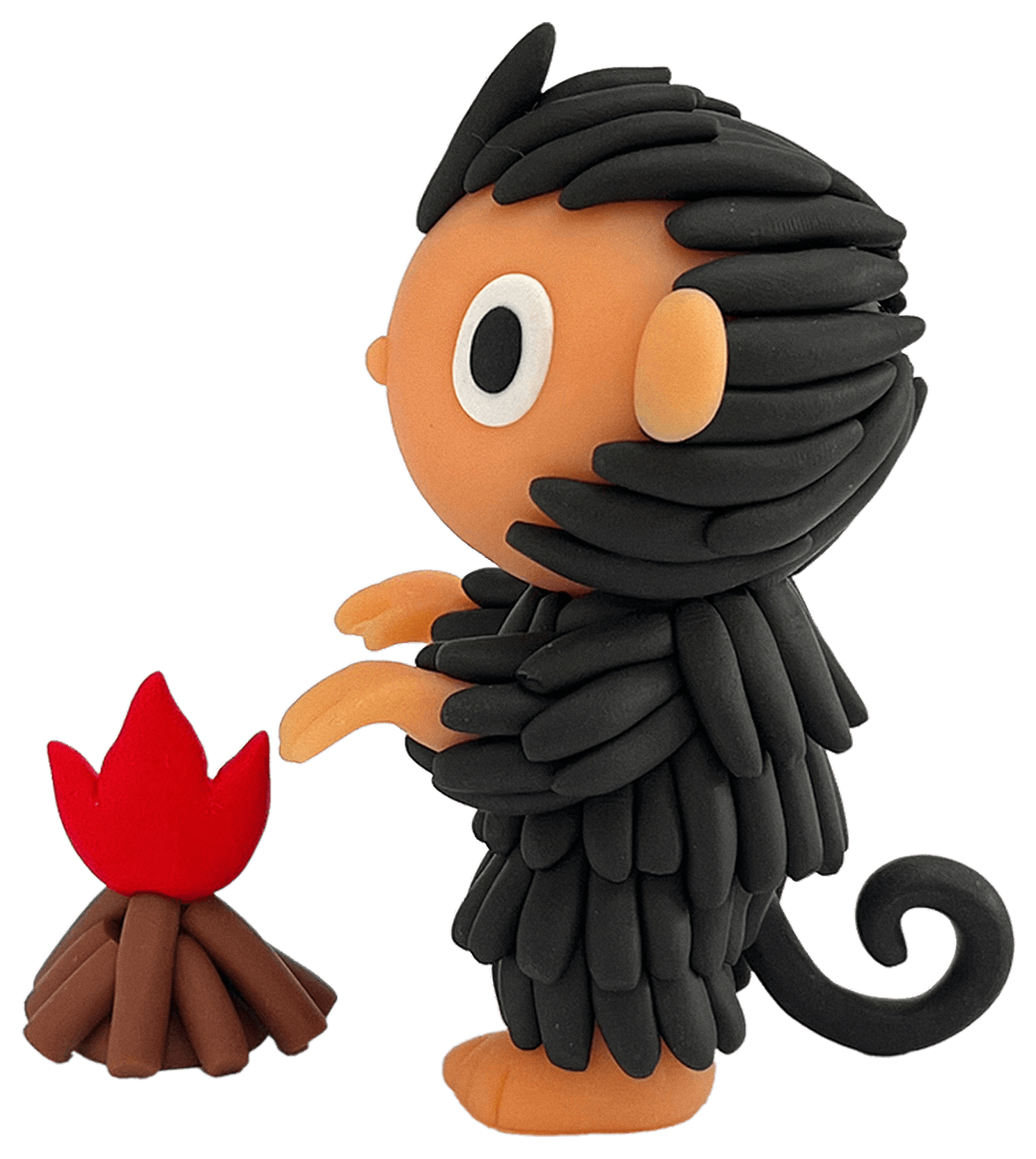
Mind-reading ape spirit of Hida and Mino, warming itself at campfires and aiding forest workers.
A yokai found in the folklore of Hida and Mino, said to possess the ability to read people's minds. It resembles a large ape covered in long black hair but causes no harm to humans. According to legend, it may approach people gathered around a fire in the mountains and even lend a hand with their work.
Gifu
Business Growth
Sacred golden rooster resting beneath the earth, crowing on the first day of spring to turn back calamity.
According to legend, Empress Jingū brought a golden rooster back from Korea.…
Hyogo
Peace and Safety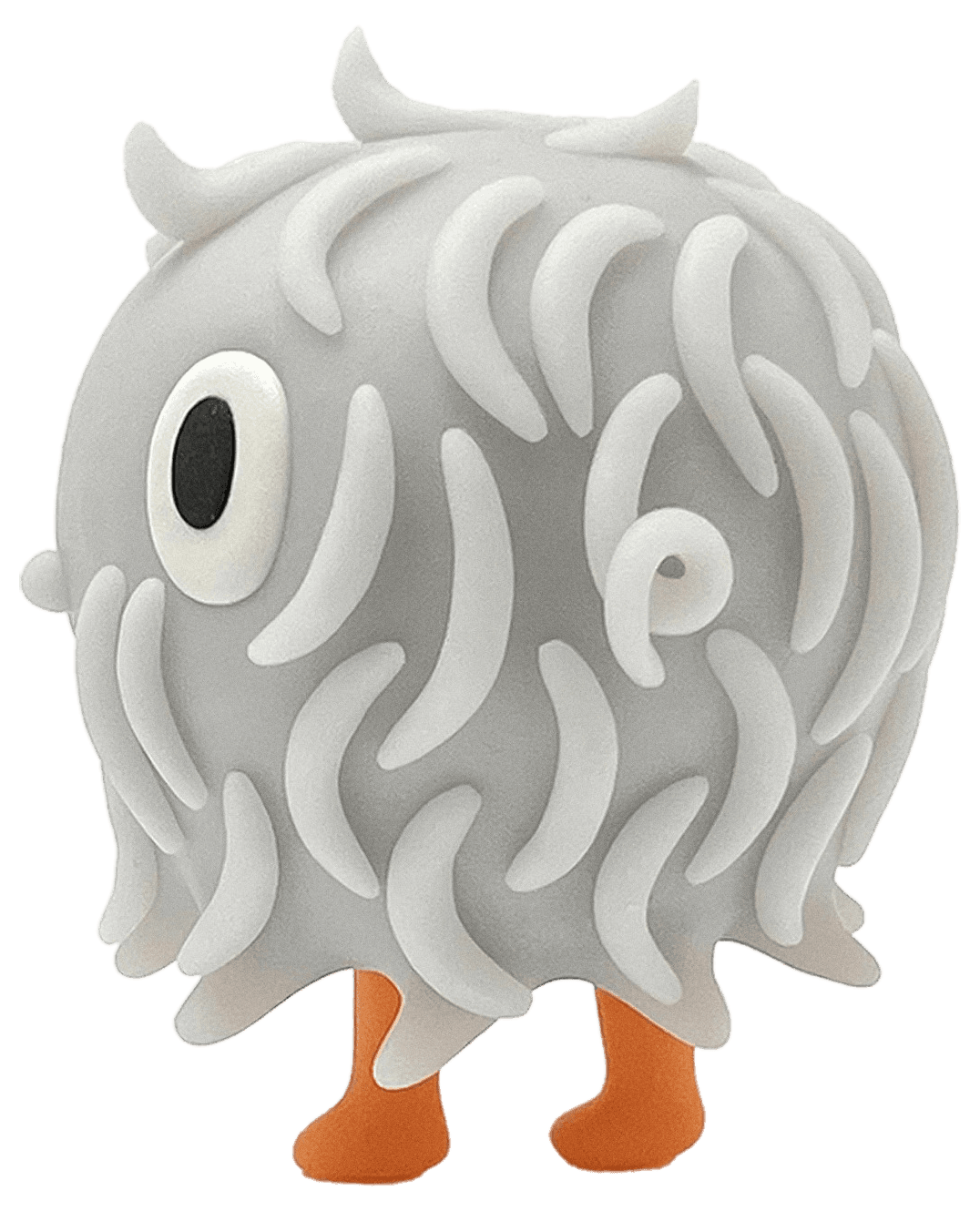
Rolling ball of thread-like fur from Nakatado that tumbles along twilight paths, expanding when challenged.
A yokai from the folklore of Nakatado District.…
Kagawa
Safety and Well-Being at Home
Human-faced toad warden of Nanto who watches over the departed before guiding their path across the threshold.
A yokai from the folklore of Nanto City. It has the body of a large toad and the face of a human. When someone dies, it is said to arrive and remain beside the body as a guardian for three weeks. In the fourth week, it guides the spirit of the deceased to the graveyard. Some traditions say that there are two of these beings, named Senpoku and Kanpoku.
Toyama
Personal Safety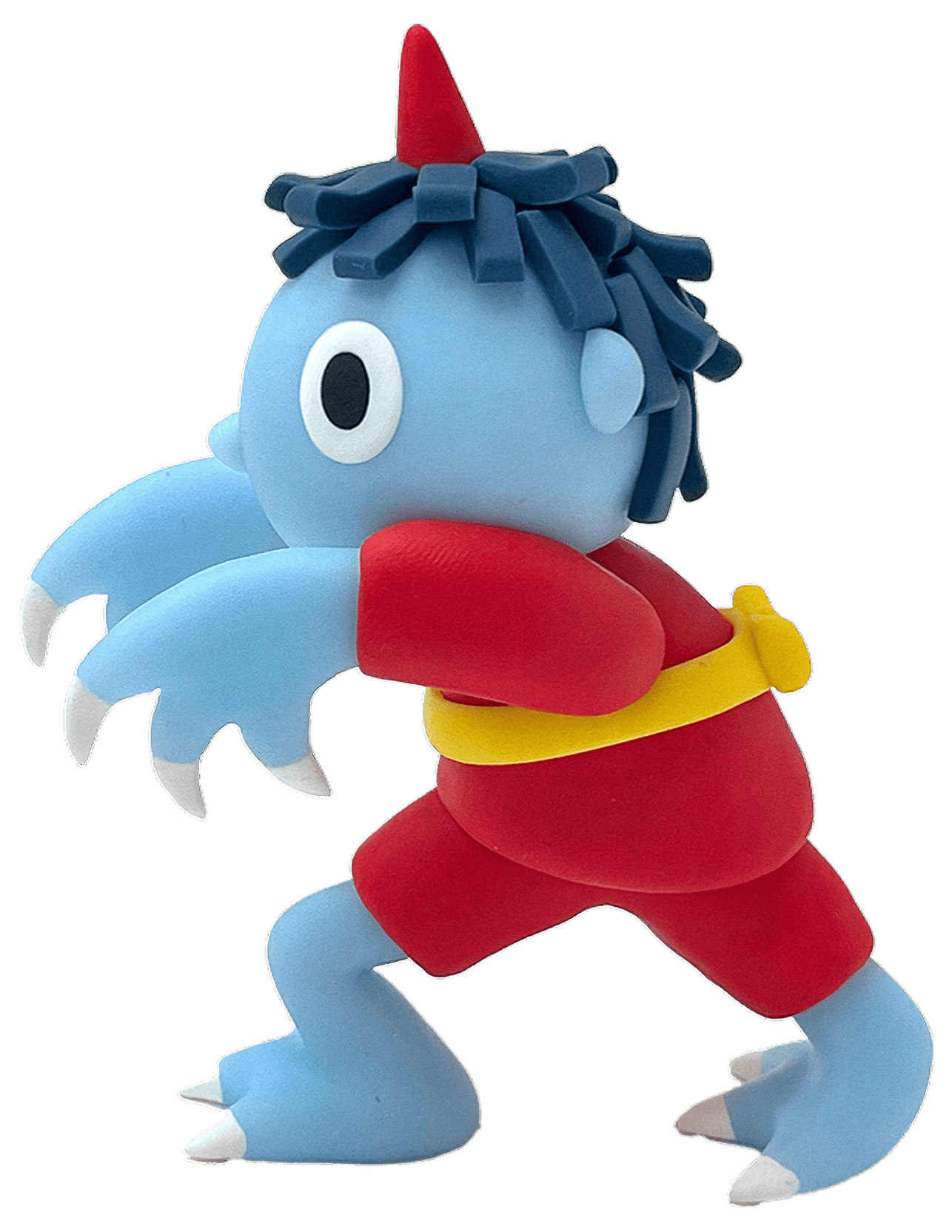
Spectral guardian of Hyūga households, invoked by generations of parents to maintain domestic order.
A demon-like yokai from the folklore of Miyazaki City, Saito City, and surrounding areas. Parents would warn misbehaving children, "Gamojin is coming," to frighten them into behaving. Because it existed mainly as a figure used to scare children, no definite appearance has ever been recorded.
Miyazaki
Safety and Well-Being at Home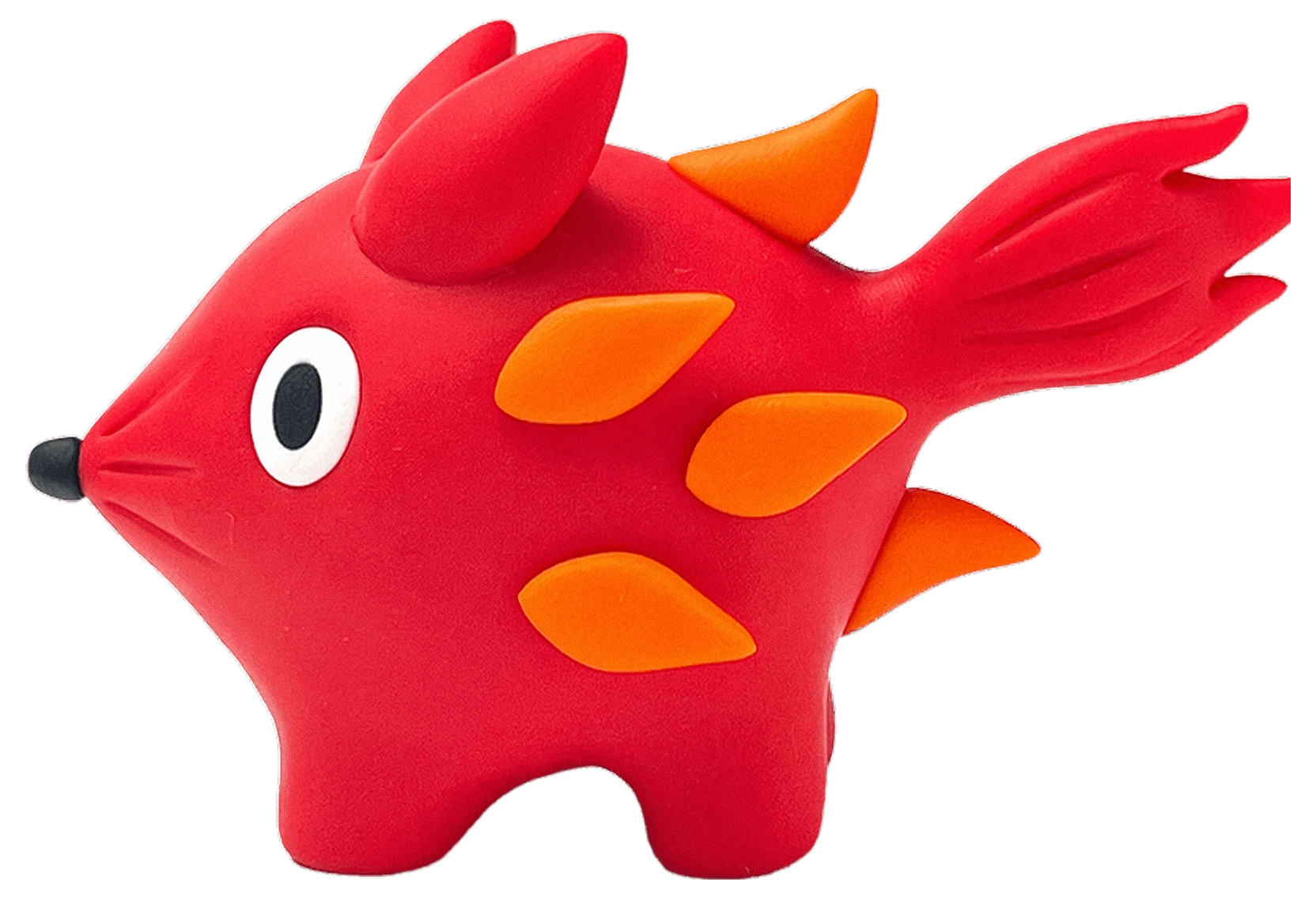
Spinning spirit of rainy slopes in Hachinohe, tumbling down Terazaka hill to test late travelers.
A yokai said to appear on rainy nights on Terazaka, the slope beside Jūōin Temple in the Minato district of Hachinohe. It spins rapidly as it rolls up and down the hill, crashing into the ankles of unsuspecting passersby. Depending on the tale, it has been described as various small animals or even as a mysterious ball of fire.
Aomori
A Safe Journey
Luminous pale hand hovering along the misty banks of the Dōshi River, gently brushing nocturnal passersby.
A yokai from the folklore of Dōshi Village in Minamitsuru District, Yamanashi Prefecture. At night, along the banks of the Dōshi River, a pale bluish-white hand is said to appear and gently stroke the cheeks of passing travelers. The true nature of the being behind the mysterious hand remains unknown.
Yamanashi
A Safe Journey
Boulder of Namai that repaid a gift of rice with a talisman pebble, founding generations of household prosperity.
According to a legend from Namai, a great stone once spoke to the head of a village headman's household, pleading, "My children are starving," and asking for food. The headman offered the stone a barrel's worth of rice balls. In return, the stone gave him a small pebble. After the headman displayed the pebble in his home, his household prospered beyond all expectation.
Yamagata
Success in Business
Chittering sparrow of Kumano guiding night walkers down mountain passes, keeping darker shadows at bay.
A legend said to have originated near Kumano Hongū Taisha. When walking at night, a sparrow may follow you, chirping softly as it goes. It is believed to protect travelers from evil spirits and safely guide them to their destination. However, legend also warns that a wolf may be following close behind the sparrow, so one should remain vigilant.
Wakayama
A Safe Journey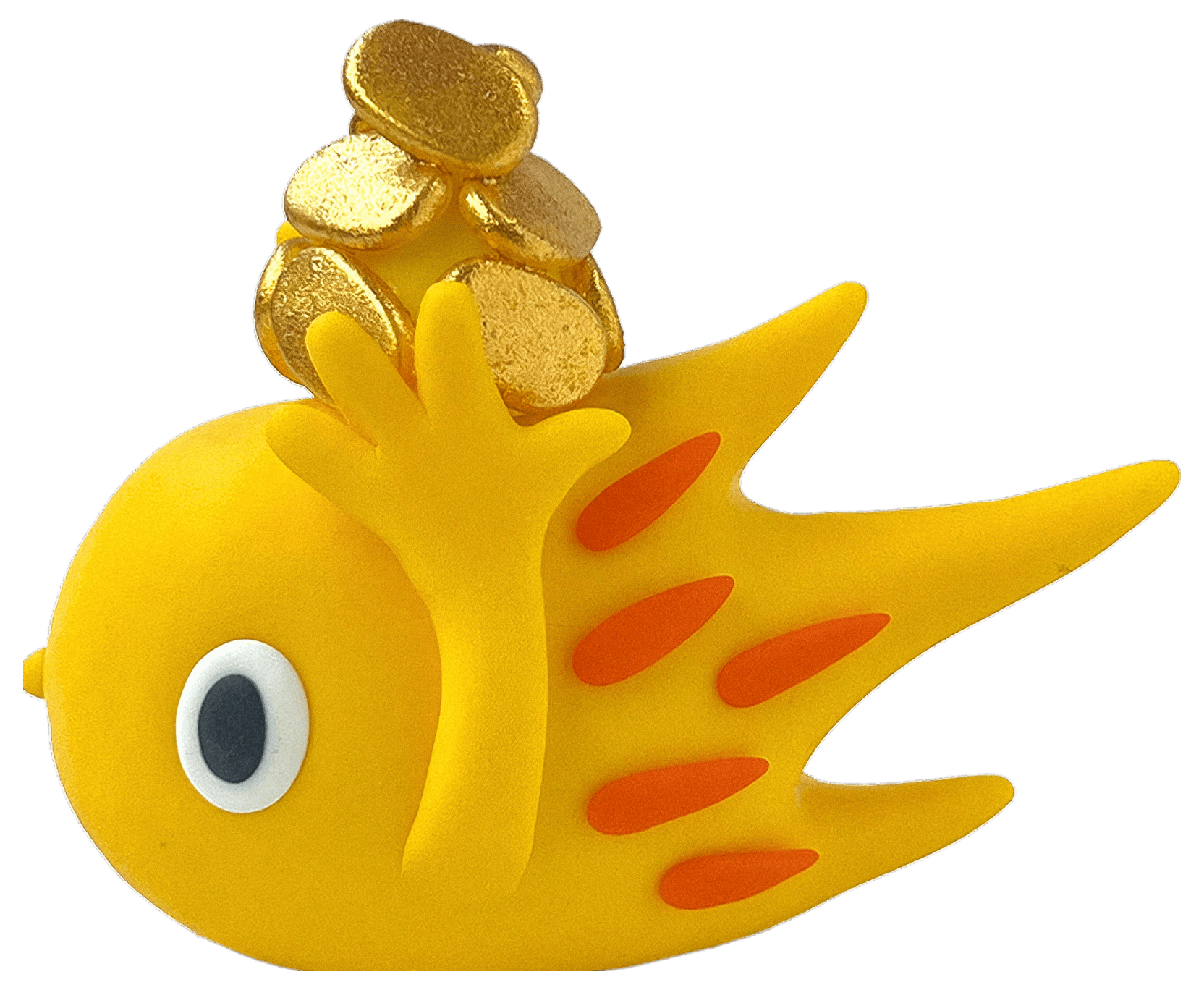
Auspicious sphere of gold descending from open skies into the storehouses of honest households.
A legend from what is now Yachimata, Chiba Prefecture. Red or golden spheres—or even oban and koban (large and small gold coins)—are said to fall from the sky, bringing treasure to the storehouses of ordinary homes. According to the tale, these miraculous gifts appear only to those who live honest and virtuous lives.
Chiba
Prosperity and Financial Success
Rhythmic midnight pestle of Mashiko, filling the outstretched baskets of steady, patient listeners.
According to a legend from Mashiko, no one has ever seen this mysterious being. Late at night, a steady tok-tok tapping sound can be heard, drawing closer and closer. When it reaches the listener's back, they must keep facing forward and quietly hold out a basket behind them. If they do, the unseen visitor will fill it with treasure.
Tochigi
Good Fortune and Wealth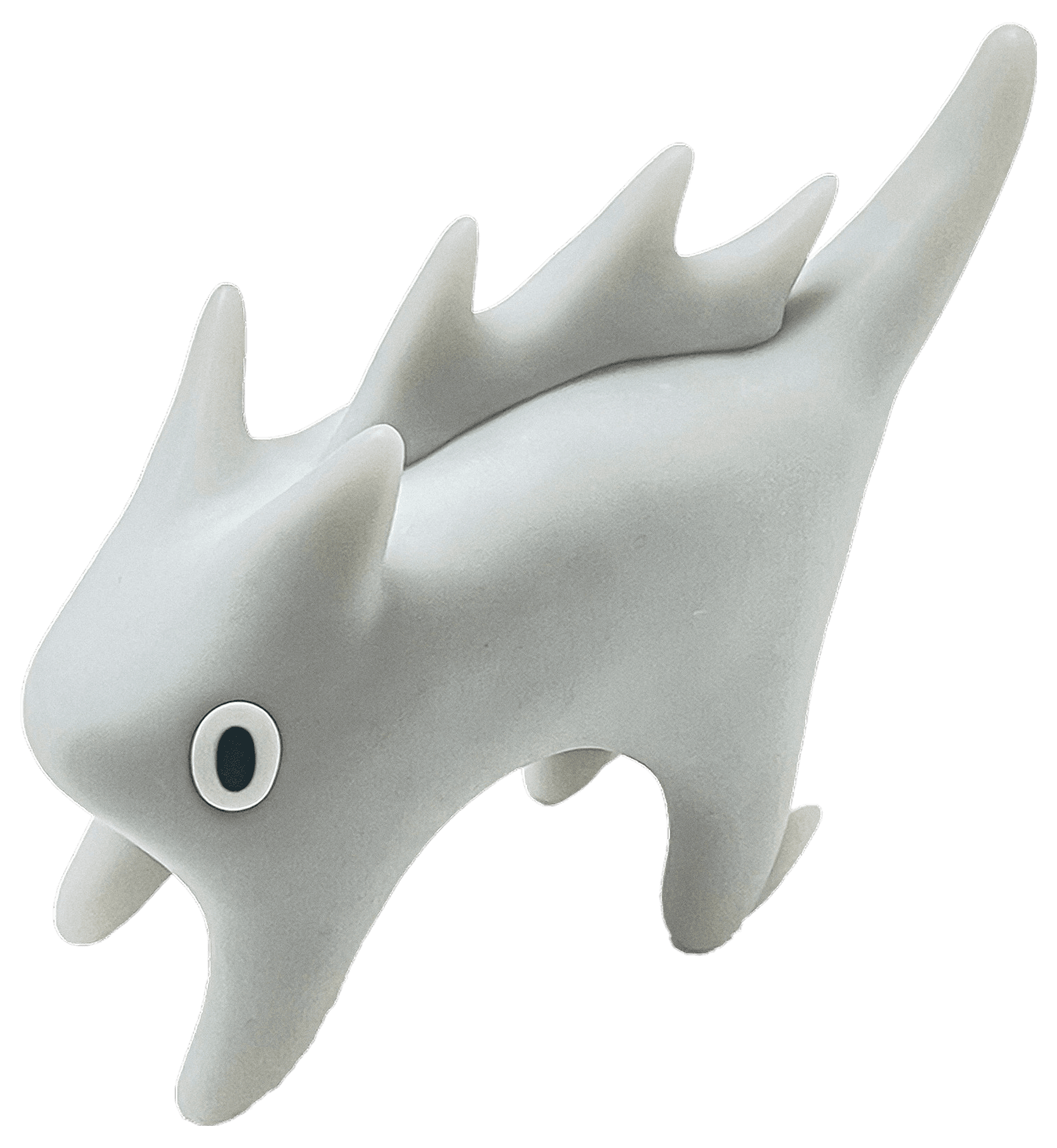
Small hound-like creature slipping between ankles on rainy roads, bringing harmless startlement to late walkers.
A yokai said to resemble a dog. It appears on rainy nights, slipping between the legs of passing travelers as it brushes against them. Though it does nothing more than startle people and cause a minor inconvenience, its eerie presence was unsettling enough that many avoided going out late at night when it was raining.
Okayama
A Safe Journey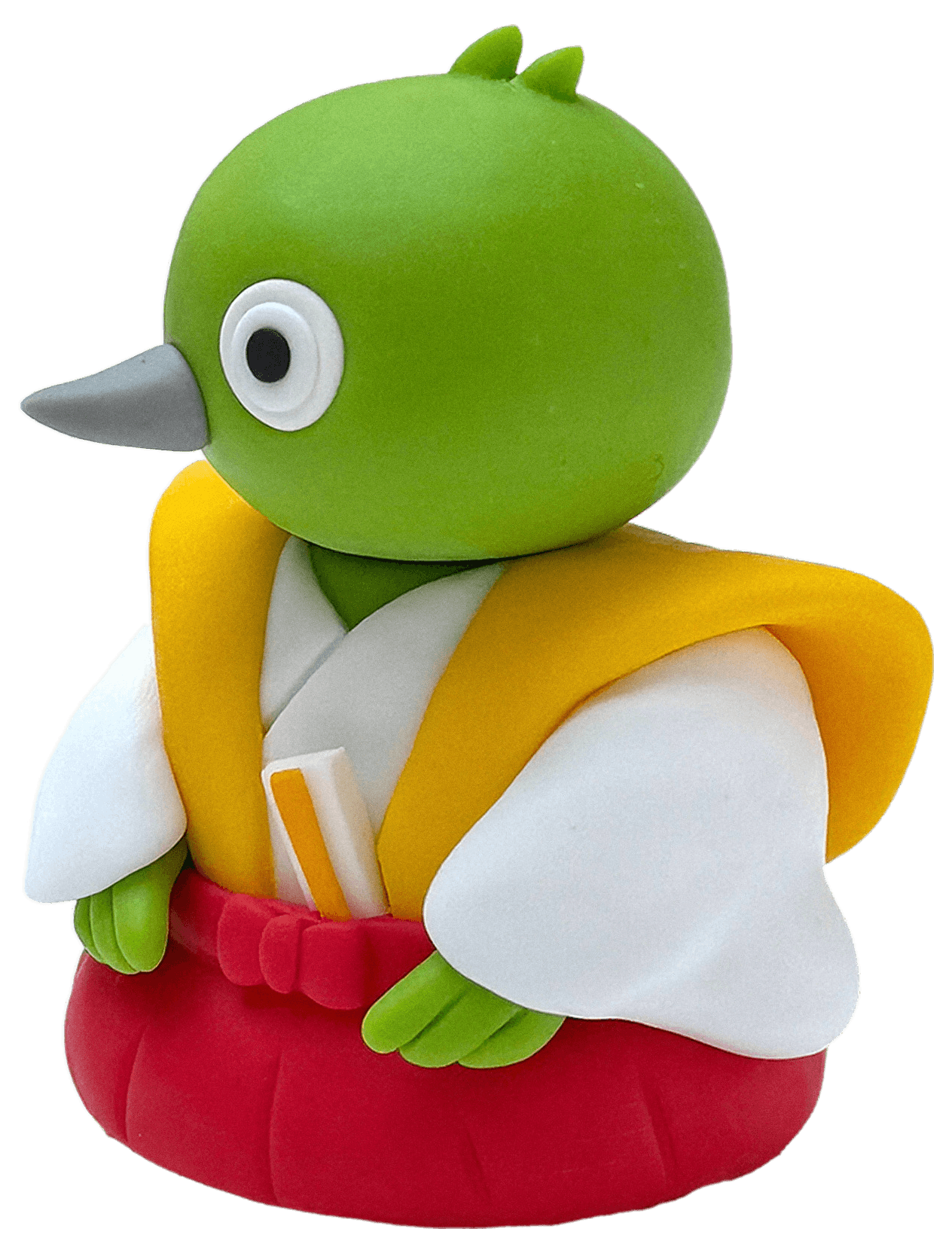
Robed spirits of an ancient Usuki treasure jar, revealing buried fortune to be shared with the whole village.
A folktale from Usuki City tells of a humble samurai with no desire for riches who spent the night in an abandoned house.…
Ooita
Good Fortune and Wealth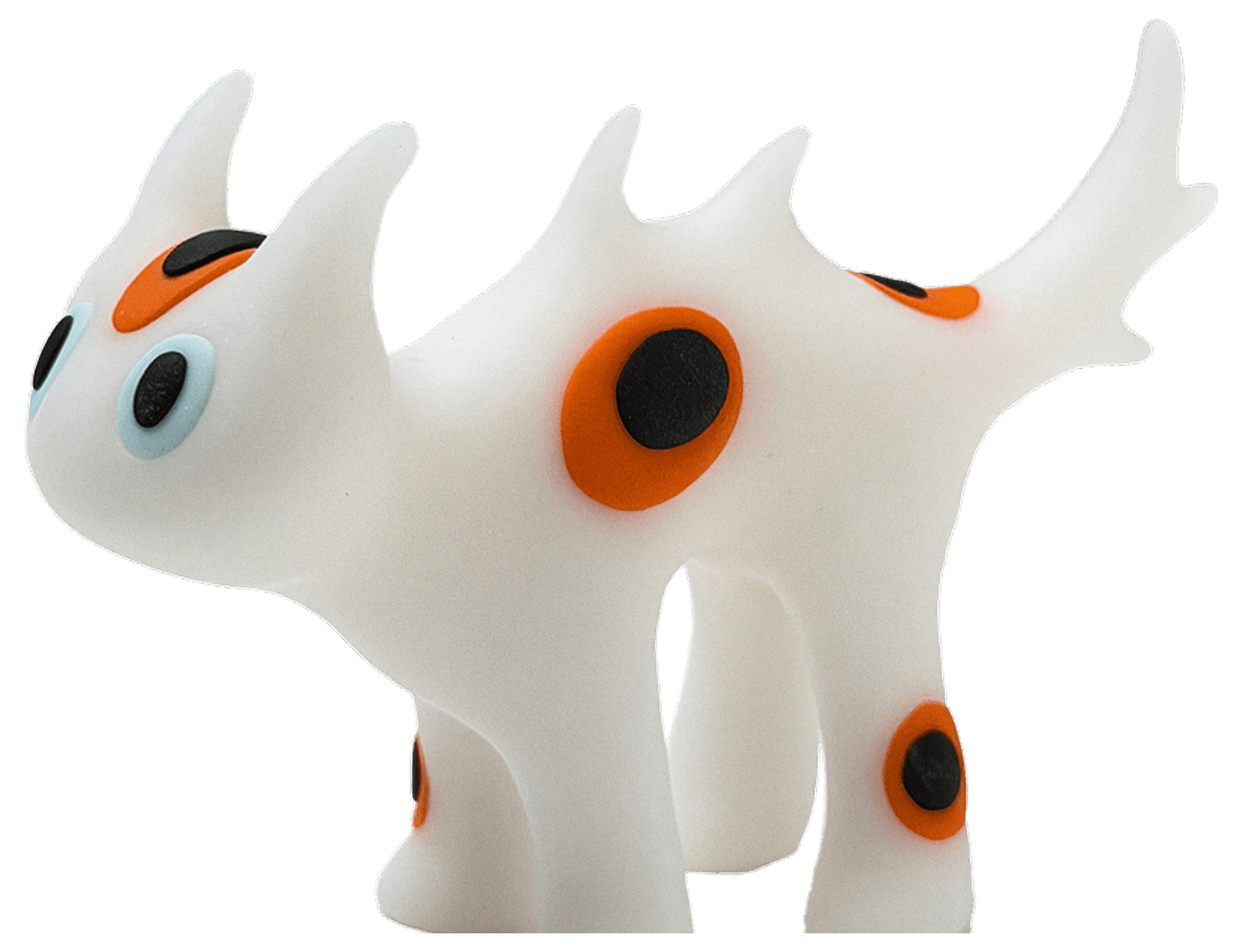
Loyal calico of Omatsu whose enduring devotion gave rise to the beckoning-cat shrines of Tokushima.
An Edo-period legend tells of Omatsu, a woman who died while remaining true to justice. After her death, the spirit of her beloved cat took revenge on those responsible for her fate. True to its name, Mike was a calico cat. Today, Omatsu Daigongen Shrine in Tokushima is home to numerous statues of calico maneki-neko (beckoning cats), honoring this enduring legend.
Tokushima
Wish Fulfillment
Mountain robed spirit of Hitachi whose appearance on sunlit ridges drives away storm clouds and rain.
An old legend from Hitachi Province tells that when the figure of a monk called Hiyoribo appears on a rocky mountainside deep in the wilderness, the rain will stop and the skies will clear. In modern Japan, people hang small dolls called teru teru bozu, with round heads and umbrella-shaped bodies, to wish for fine weather. Some say that this custom originated with Hiyoribō.
Ibaraki
Peace and Safety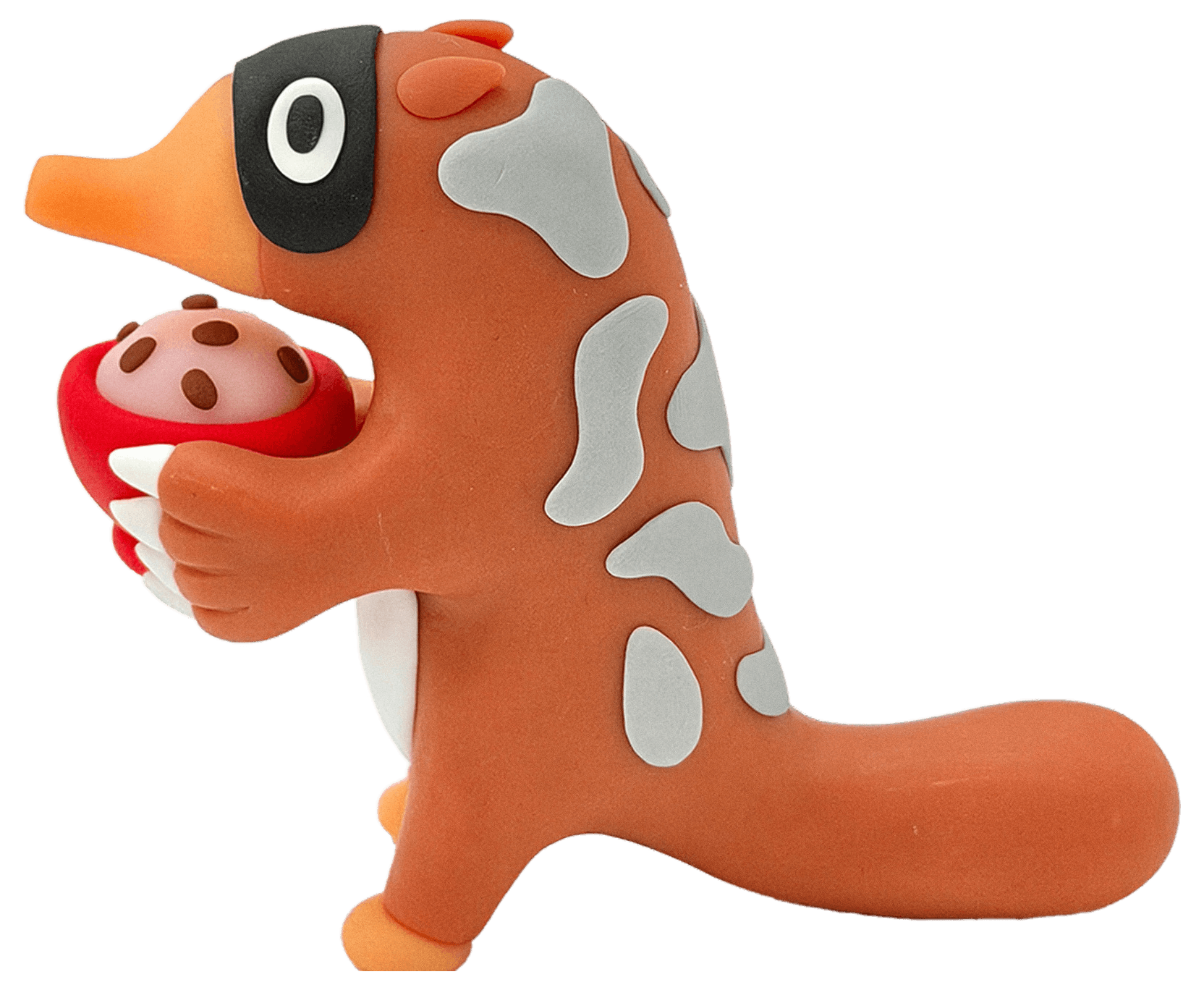
Rare household creature of Miyoshi, multiplying under the floorboards to bless growing families.
According to a legend from the Miyoshi region of Hiroshima Prefecture, the Gedou is a mottled yokai larger than a mole but smaller than a weasel. Any household beneath whose floor it takes up residence is said to prosper. Each time a girl is born into the family, the number of Gedou increases by seventy-five.
Hiroshima
Prosperity and Financial Success
Diminutive corner spirit beating a miniature drum late at night to soothe restless nurseries into sleep.
A tiny yokai said to appear late at night, emerging from the corner of a room while beating a small drum. When a child would not stop crying at night, parents would soothe—or frighten—them by saying, "Sumabon is coming."
Ishikawa
Safety and Well-Being at Home